Theme: From Curiosity to Scientific Mastery
Level 1: Foundations of Scientific Inquiry & Measurement (Classes 1–20)
Advanced Focus
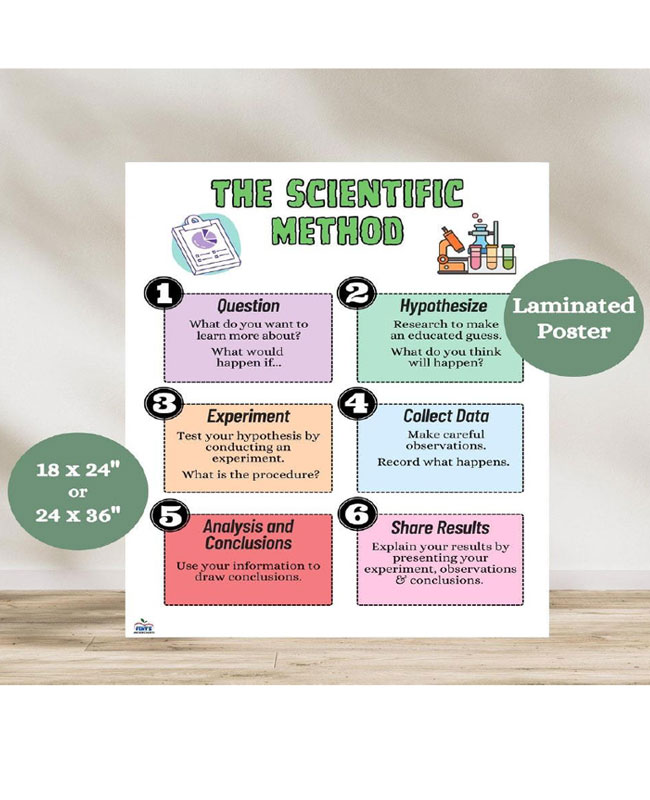
- Scientific reasoning vs everyday thinking
- Independent, dependent, and control variables
- Experimental design & error analysis
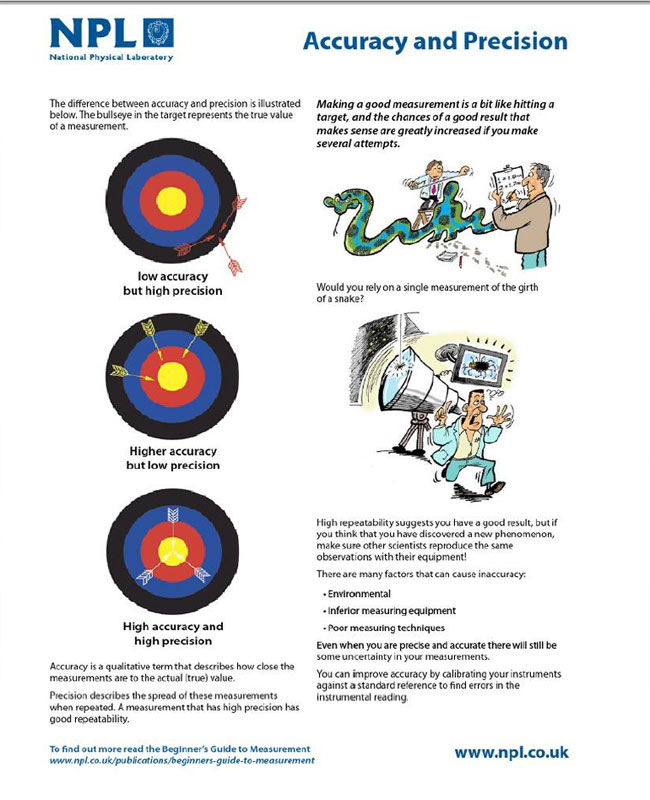
- Accuracy, precision, uncertainty & significant figures
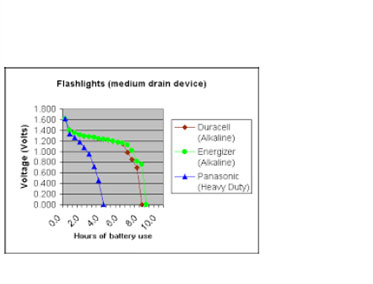
- Data representation: line graphs, scatter plots
- Introduction to digital data tools
Outcome: Students design and evaluate investigations like young researchers.
Level 2: Atomic Theory & Structure of Matter (Classes 21–40)
Advanced Focus
- Historical development of atomic theory
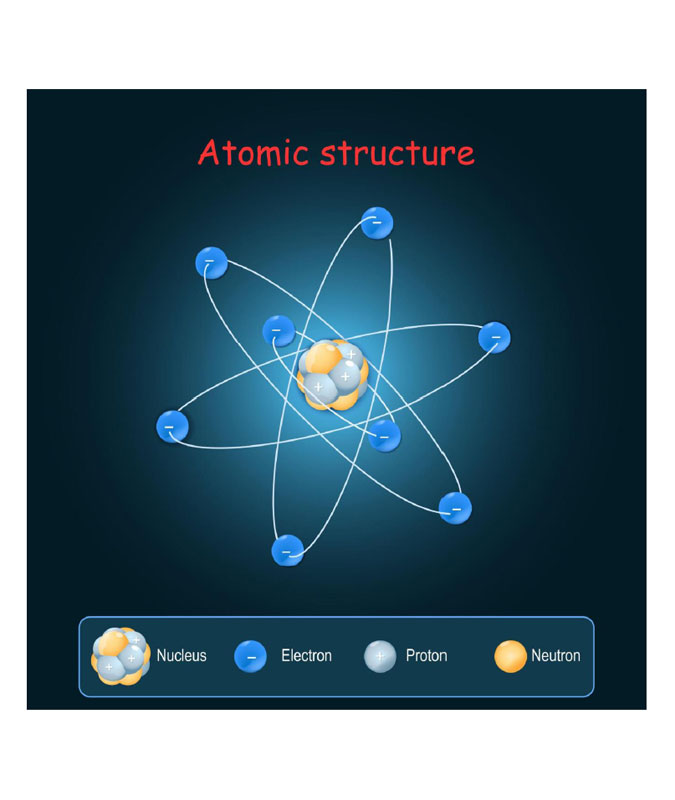
- Subatomic particles & atomic models
- Atomic number, mass, isotopes (conceptual)
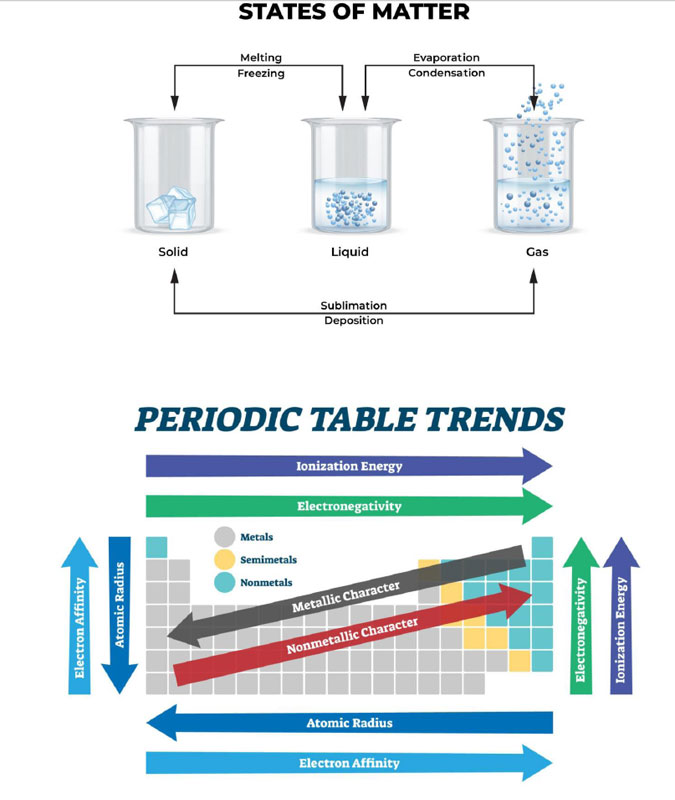
- Particle energy and phase changes
- Periodic trends (groups, reactivity, metals vs nonmetals)
- Diffusion and kinetic theory
Outcome: Conceptual foundation for modern chemistry
Level 3: Chemical Reactions & Quantitative Thinking (Classes 41–60)
Advanced Focus
- Types of reactions (combustion, displacement, neutralization)
- Conservation of mass (quantitative experiments)
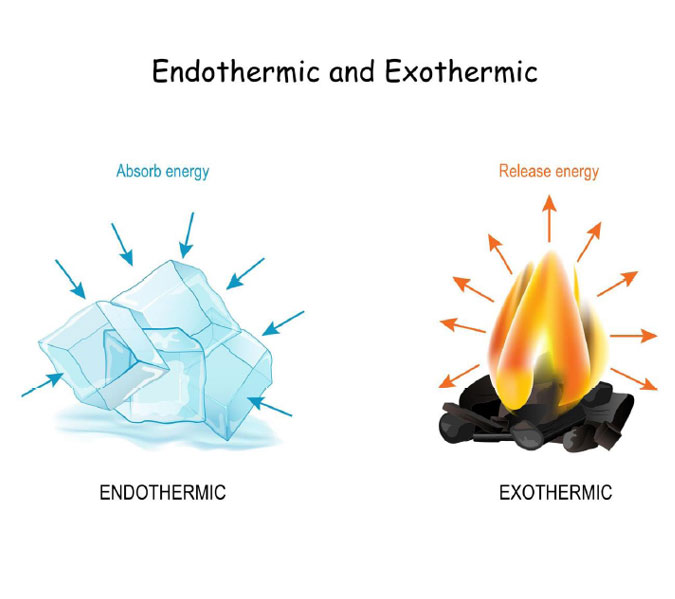
- Energy changes: exothermic vs endothermic
- Reaction rates & influencing factors
- Introduction to pH scale and indicators
Outcome: Analytical chemical reasoning and experimental interpretation.
Level 4: Cells, Genetics & Biotechnology (Classes 61–80)
Advanced Focus
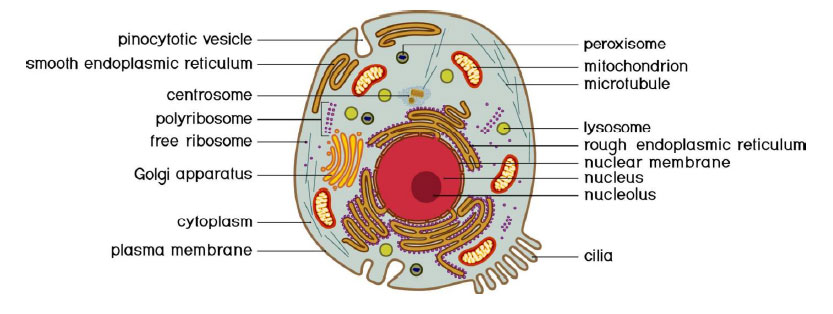
- Cell specialization and transport mechanisms
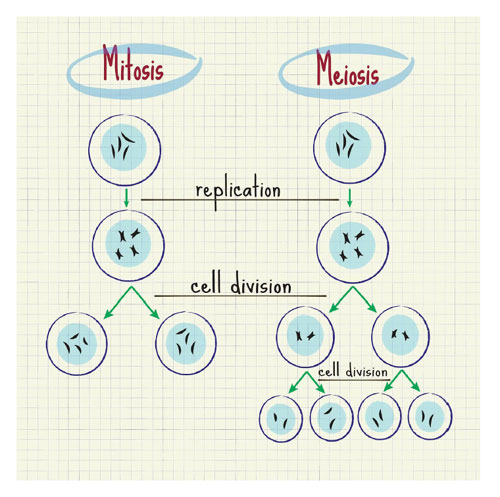
- Mitosis vs meiosis (conceptual comparison)
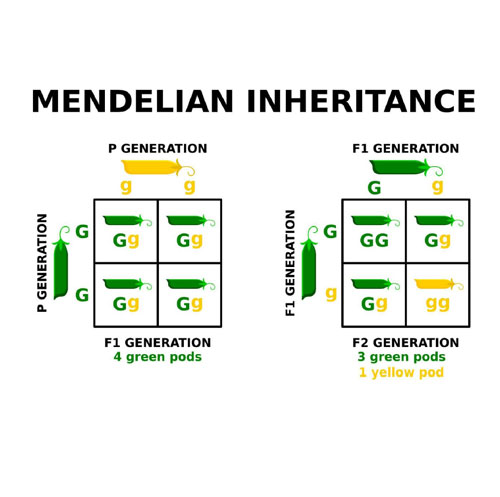
- DNA structure & genetic inheritance (Punnett squares)
- Mutations and variation
- Introduction to biotechnology & ethics
Outcome: Strong life science and genetics foundation.
Level 5: Human Physiology & Homeostasis (Classes 81–100)
Advanced Focus
- Organ system integration
- Gas exchange and circulation efficiency
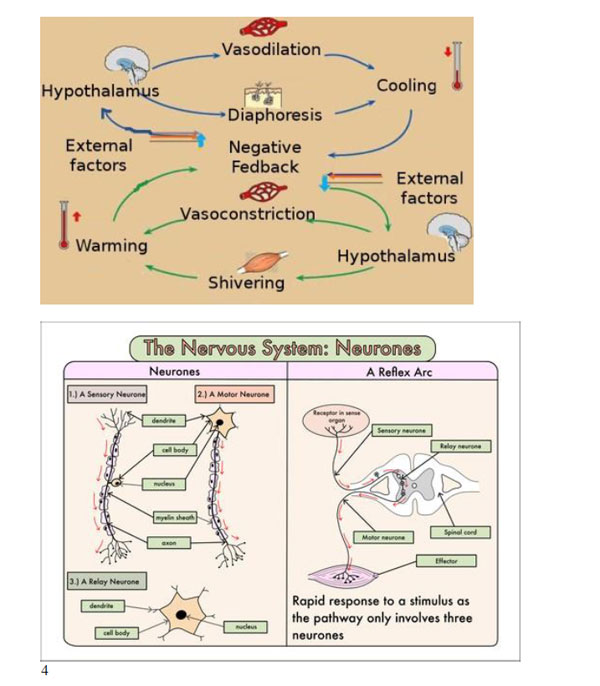
- Nervous and endocrine system basics
- Homeostasis and feedback mechanisms
- Physiological data collection (heart rate, breathing)
Outcome: Systems thinking in human biology.
Level 6: Forces, Motion & Newtonian Physics (Classes 101–120)
Advanced Focus
- Vector concepts (qualitative)
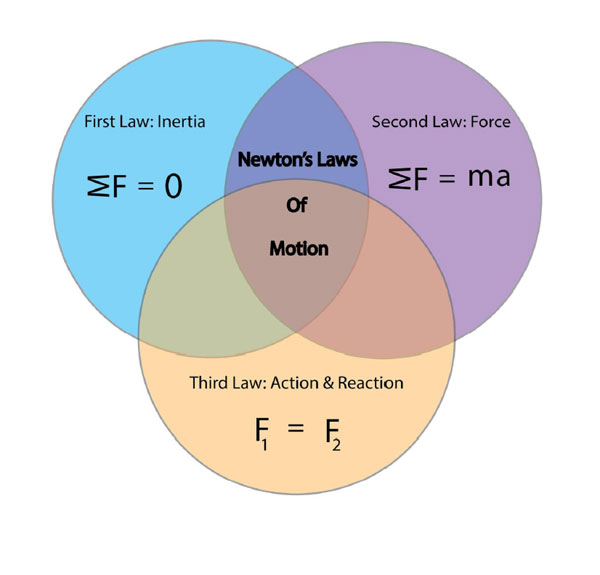
- Newton’s Laws with real data
- Motion graphs interpretation
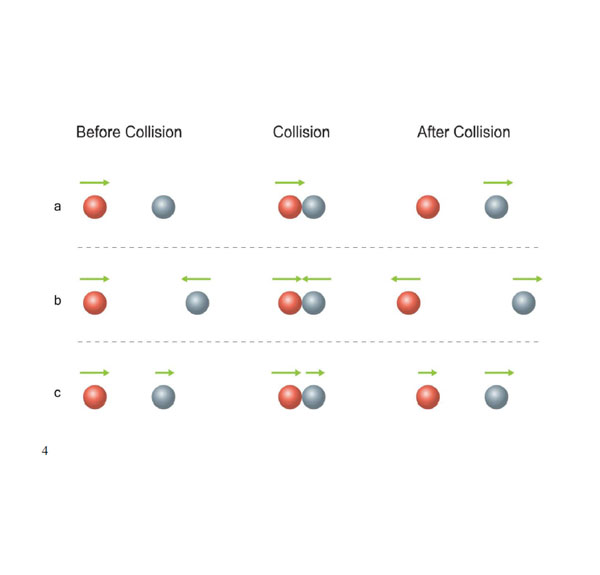
- Momentum and collisions
- Mechanical advantage & efficiency
Outcome: Quantitative physics reasoning.
Level 7: Energy Systems & Thermodynamics (Classes 121–140)
Advanced Focus
- Energy conservation in systems
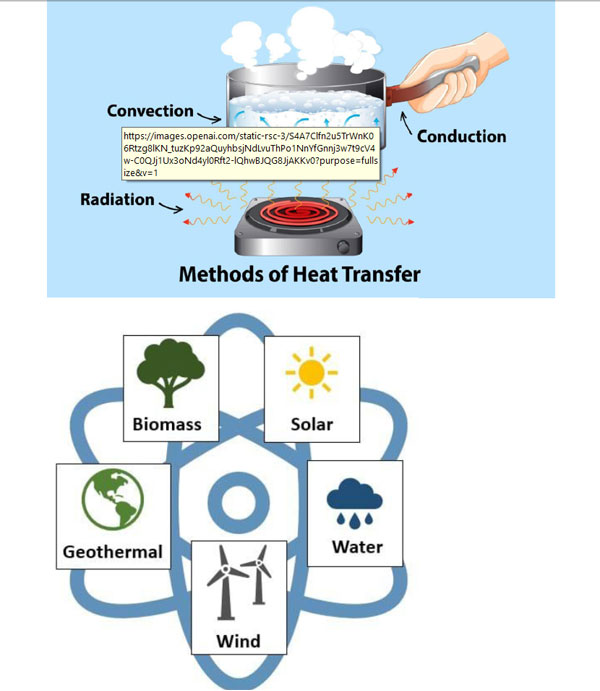
- Thermal energy & particle motion
- Efficiency and energy loss
- Renewable energy engineering design
- Real-world energy analysis
Outcome: Systems-level understanding of energy
Level 8: Waves, Electricity & Magnetism (Classes 141–160)
Advanced Focus
- Wave properties & energy transfer
- Sound and electromagnetic spectrum
- Circuit design & Ohm’s Law (conceptual)
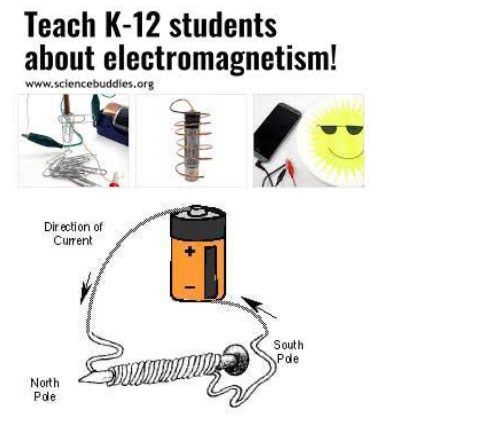
- Magnetism & electromagnets
- Optics and image formation
Outcome: Foundation for modern physics and engineering.
Level 9: Earth Systems, Climate & Sustainability (Classes 161–180)
Advanced Focus
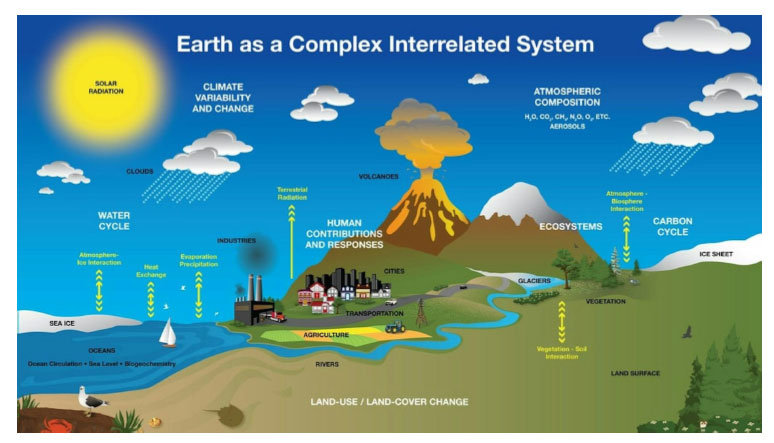
- Earth system interactions (geosphere, atmosphere, hydrosphere, biosphere)
- Climate vs weather data analysis
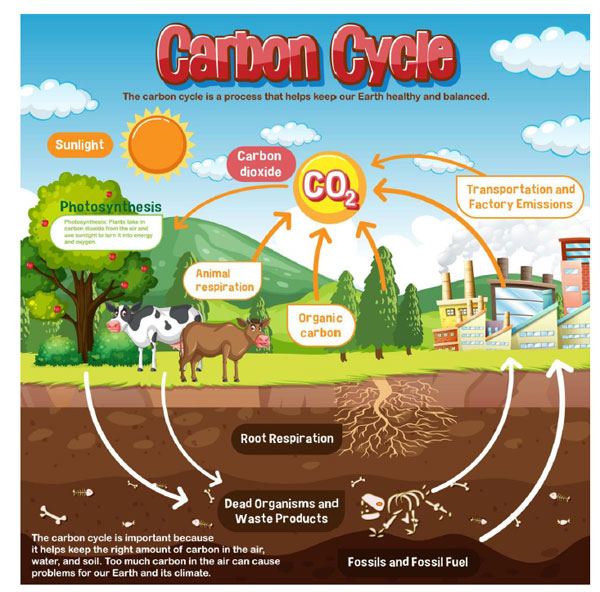
- Carbon cycle & human impact
- Natural hazards & risk assessment
- Sustainability solutions
Outcome: Environmental literacy and data-based reasoning.
Level 10: STEM Research, Engineering & Capstone (Classes 181–200)
Advanced Focus
- Research question development
- Literature review (guided)
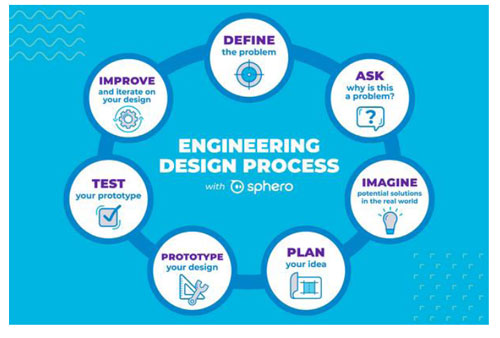
- Engineering design cycle (prototype–test–improve)
- Data analysis & scientific reporting
- Presentation and defense
Capstone Examples
- Renewable energy efficiency study
- Water purification system
- Biome ecosystem model
- Physics engineering prototype
Outcome: Independent scientific investigation & innovation skills.
Program Depth Highlights (Premium Positioning)
This curriculum develops:
- Experimental design & error analysis
- Quantitative reasoning in science
- Systems thinking across disciplines
- Research & engineering skills
- Scientific communication
- NGSS Practices & UK Working Scientifically
Certification: Orbis Academy Certificate in Advanced Integrated Science & STEM Research
Level-Wise Learning Pathway (Summary)
Level 1: Scientific Skills & Measurement
- Experimental design
- Variables & error analysis
- Graphing and data
Game: Measurement accuracy challenge
Level 2: Matter & Atomic Theory
- Particle model
- Periodic trends
- Physical vs chemical change
Game: Build-the-atom simulation
Level 3: Chemical Reactions
- Reaction types
- Energy changes
- pH investigation
Game: Reaction prediction lab
Level 4: Cells & Genetics
- Cell processes
- DNA & inheritance
- Biotechnology intro
Game: Genetic trait simulation
Level 5: Human Body Systems
- Homeostasis
- Circulation & respiration
- Health science
Game: Heart-rate experiment challenge
Level 6: Forces & Motion
- Newton’s Laws
- Motion graphs
- Momentum
Game: Motion prediction race
Level 7: Energy & Thermodynamics
- Energy transfer
- Heat & efficiency
- Renewable design
Game: Build an energy-efficient house
Level 8: Waves & Electricity
- Circuits
- Electromagnetism
- Light & sound
Game: Circuit builder challenge
Level 9: Earth Systems & Climate
- Climate data analysis
- Carbon cycle
- Sustainability
Game: Climate survival simulation
Level 10: STEM Research & Capstone
- Research project
- Engineering design
- Final presentation
Game Element: Science Fair Competition
Assessment & Parent Transparency
Evaluation System
- Concept quizzes (every 5 classes)
- Project-based assessment
- Experiment reports
- Final capstone evaluation
Parent Updates
- Monthly progress report
- Skill development tracking
- Portfolio of student projects
Skills Students Develop
- Scientific reasoning
- Data analysis
- Problem-solving
- Research & presentation
- Engineering thiking
- Confidence in STEM
Certification
Orbis Academy Certificate in Advanced Integrated Science & STEM Research
Why Parents Choose This Program (Key Selling Section)
✔ International curriculum alignment (USA/UK)
✔ Hands-on experiments every level
✔ Game-based learning for engagement
✔ Project portfolio for future opportunities
✔ Research & innovation focus